Explain the Different Types of Forces in Geography
Some landforms are created in a matter of few hours while others take millions of years to appear. Normal Force F norm.

Forces And Motion Posters Force And Motion Motion Poster What Is Motion
Reverse faults which are when compression of.
. Distinguish between the different types of regional distinctions recognized in geography. The normal force is the support force exerted upon an object that is in contact with another stable object. Landforms are defined as the natural physical features found on the surface of the earth created as a result of various forces of nature such as wind water ice and movement of tectonic plates.
The force of gravity on earth is always equal to the weight of the object as found by the equation. Do not confuse weight with mass Return to Top. The plates move towards one another and this movement can cause earthquakes and volcanoes.
Force is external and results only when there is interaction between objects. The Coriolis force is a fictitious force representing a deflection of moving objects when they are viewed in a rotating reference frame of the Earth. Involve pushing of the rock strata against a.
Erosion is the process that wears away the river bed and banks. The force which is applied by our muscles is called applied force is also called muscular force. Erosion also breaks up the rocks that are carried by the river.
High Tide This is a stage where the water reaches its maximum level. The forces F h and F v are the forces acting on free body of water. The movement of the material is called creeping sliding flowing toppling and falling.
Force can be classified into two broad categories. This force is known as dynamic force. We have studied tidal and Coriolis forces previously.
This is known as. Another type of current that contributes towards the formation of coastline landforms is rip current. We can divide them into two types.
The force exerted by. This force works opposite to the displacement of molecules. The longshore currents are created when waves are refracted while entering into shallow water.
To review the tidal force is responsible for the tides it is a differential force due to a secondary effect of the force of gravity. They are most common at divergent boundaries. These longshore currents carry along with themselves vast quantities of material and sediments.
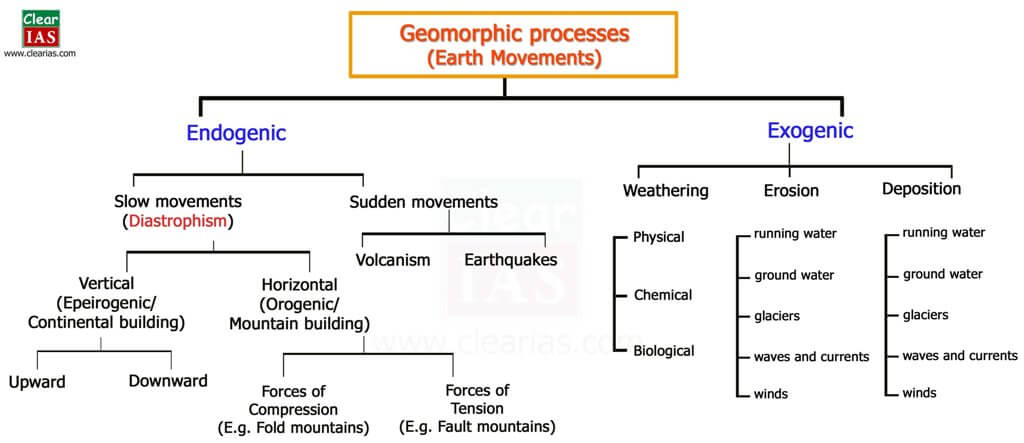
The forces which affect the crust of the earth are divided into two broad categories on the basis of their sources of origin. This process is both erosional and depositional. Weathering mass wasting erosion and deposition are the main exogenic processes.
Like in a spring or elastic rubber band etc. Extensional forces those that pull the plates apart and gravity are the forces that create normal faults. Normal faults which are when extensional forces cause the Earths crust to break and the rock drops lower.
The forces coming from within the earth are called as endogenetic forces which cause two types of movements in the earth viz. I Forces of compression. A human settlement is defined as a region populated more or less permanently.
The resultant of the forces on the element of water is as follows. Learn about the tools geographers use to study the earths surface. These are known as horizontal or tangential movements.
There may be some settlements which are unstable and are occupied for short periods even a season. I Forces of compression and ii Forces of tension. Flood Tide Over a period of several hours there will be a rise in sea level.
Understand the focus of geography and the two main branches of the discipline. These forces include gravity force hydrostatic pressures and reactions of any object in contact with water. Ebb Tide This is a stage.
Contact Forces Non-contact Forces. Summarize the grid system of latitude and longitude and how it relates to seasons and time zones. Forces can be divided into primarily into two types of forces.
The processes which occur on the earths surface due to the influence of exogenic forces are called exogenic processes or exogenic geomorphic processes. Different types of forces and their examples. The six types of cultural diffusion are relocation expansion contagious hierarchical stimulus and maladaptive diffusion AP Human Geography exam info.
Normal faults form when the hanging wall drops down in relation to the footwall. Each of these depends on the speed and composition of the material moving. Non-Contact forces Spring Force.
Tension of the preexisting rocks since these forces act horizontally or tangentially to the earth s spherical surface. Exogenic forces cause wearing down in the earths surface and are therefore often called land wearing force. The houses may be planned or redesigned buildings may be remodelled functions may change but settlement continues in space and time.
Tide changes as per the 4 stages given below. Fgrav m g where g 98 Nkg on Earth and m mass in kg Caution. Consider two sections A and B of water on the curved surface.
As the plates collide the oceanic plate is forced beneath the continental plate. The mass movement process also sometimes called mass wasting occurs when soil and rock move down a slope under the force of gravity. A force is a push or pull resulting due to the interaction between two objects.
Force is strength or energy applied towards any object for physical action or any movement. These can be separated into three types.
Geomorphic Processes And Earth Movements Clearias

Types Of Earth Movements Earth Social Science Movement
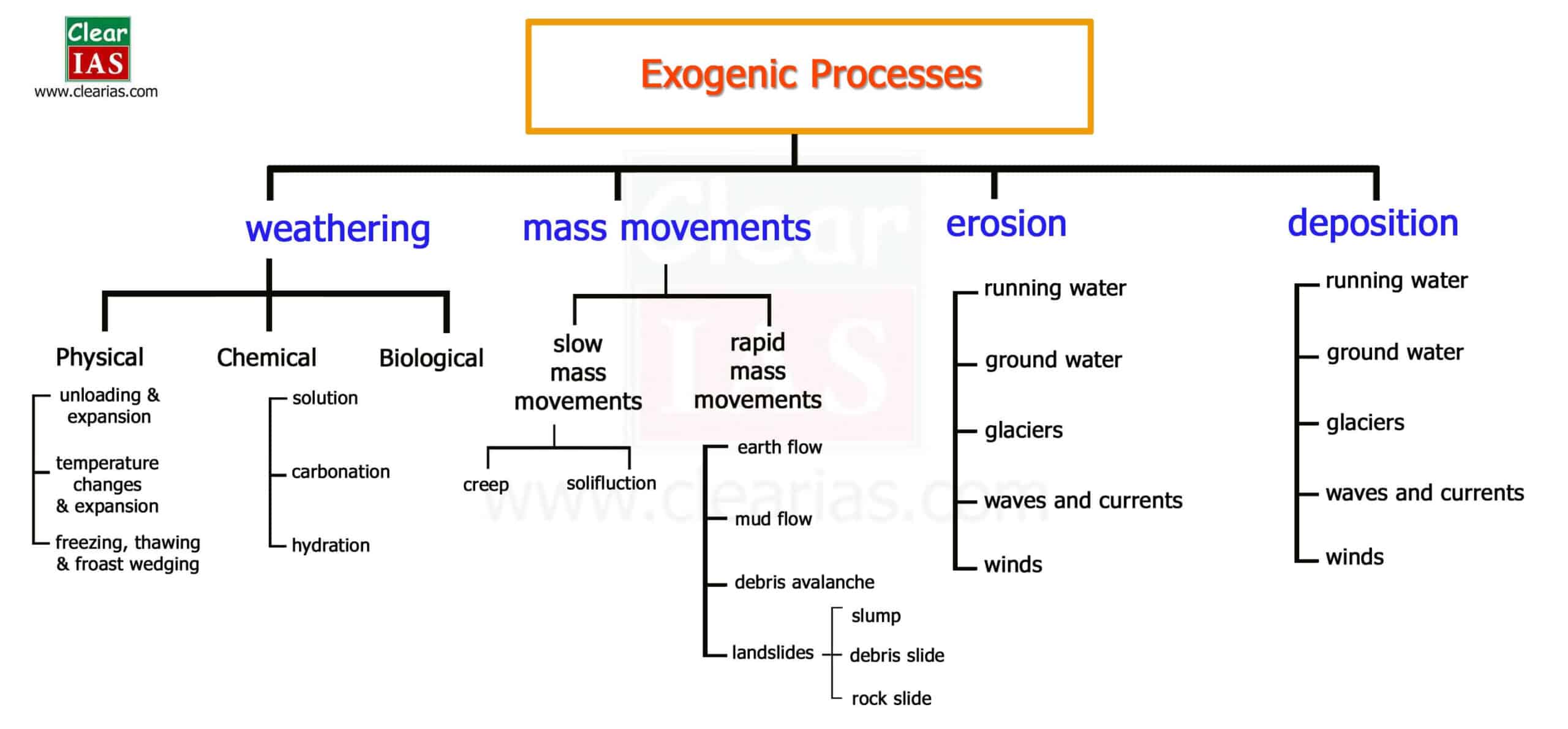
Exogenic Forces Classification Clearias

Different Types Of Forces Primaryleap Co Uk Science Worksheets Simplifying Rational Expressions Science Teaching Resources

Fossils Comic Vintage Science Comics Science For Kids History Geography

Forces And Motion Interactive Notebook Force And Motion Teacher Guides Science Lessons

Types Of Non Contact Forces Force Force And Pressure Physics And Mathematics

Infographics Tata Howard Civil Engineering Design Civil Construction Civil Engineering Construction

Moon Phases And Ocean Tides Colorful Posters For Classroom Astronomy Lessons Tide Ocean Unit

3b Regional Climate Drivers Weather Science Geography Activities Earth And Space Science

Geomorphic Processes Endogenic And Exogenic Forces Upsc

Zone Of Convergence Google Search Weather Science Geography Lessons Meteorology

Types Of Forces Concepts Sub Types Videos With Examples

Exogenic Forces Classification Clearias Force Fundamental Groundwater

Types Of Mountains Geography Assignment Help Geography Type Infographic

Geomorphic Processes Endogenic And Exogenic Forces Upsc
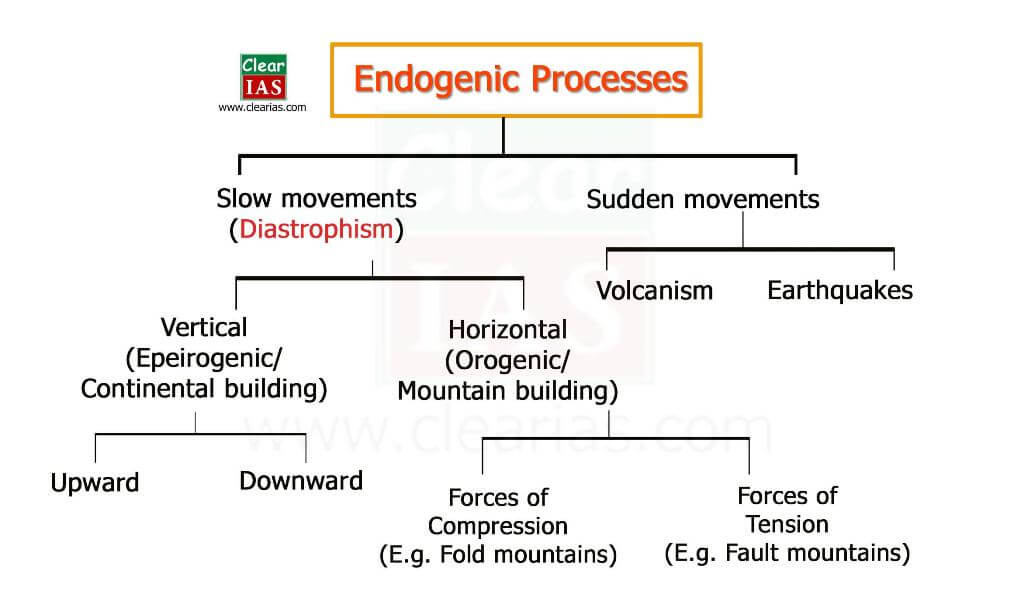
Endogenic Forces And Evolution Of Land Forms Clearias

Pin On Geography

Layers Of Earth Diagram Ancient India Map Earth Science Earth


Comments
Post a Comment